Table of Contents
- Key Takeaways
- Quick Verdict
- Product Overview & Specifications
- Real‑World Performance & Feature Analysis
- Design & Build Quality
- Performance in Real Use
- Ease of Use
- Durability / Reliability
- Pros & Cons
- Comparison & Alternatives
- Cheaper Alternative – iHome iBT29 Bluetooth 5.0 Internet Radio
- Premium Alternative – Sonos Five with Sonos Port (as a streaming hub)
- Buying Guide – Who Should Buy?
- Best for Beginners
- Best for Professionals / Audio Enthusiasts
- Not Recommended For
- FAQ
- Will the GDI‑WHAL01 work with my existing Sonos system?
- How often do I need to replace the AAA batteries?
- Can I use the GDI‑WHAL01 without the Grace app?
- Is the 5‑band EQ enough for fine‑tuning sound?
- Does the unit support Spotify Connect?
- Is the price of $90 justified?
- What happens if the Wi‑Fi network drops?
- Can I use the GDI‑WHAL01 as a speaker for my TV?
- Is there an Ethernet port for a wired connection?
When you walk into a living room that’s humming with a crisp, station‑to‑station shuffle, you know the source is more than a cheap Bluetooth speaker. For music lovers who crave both the breadth of 100,000 internet stations and the flexibility of Chromecast, the Grace Digital GDI‑WHAL01 promises a “all‑in‑one” solution. But does it deliver a seamless listening experience, or does it feel like a jack‑of‑all‑trades that falls short on the details?
Key Takeaways
- Streaming breadth: Access to over 100,000 internet radio stations via Grace’s own app and built‑in Wi‑Fi.
- Chromecast built‑in: Cast from any Chrome‑enabled device without extra dongles.
- Bluetooth 5.0: Low‑latency, stable wireless playback for phones and tablets.
- Hi‑Res audio support: Plays 24‑bit/192kHz files, though source quality depends on your library.
- Power: Runs on 2 AAA batteries – portable but not ideal for permanent wall mounting.
- Value: Priced around $90, it undercuts many premium network players while offering more features than basic tabletop radios.
Quick Verdict
Best for: Casual listeners who want a single device for internet radio, Chromecast casting, and Bluetooth streaming without breaking the bank.
Not ideal for: Audiophiles who demand dedicated DACs, wall‑mounted solutions, or a unit that runs on AC power.
Core strengths: Massive station library, simple Wi‑Fi setup, versatile connectivity, and solid build for its price.
Core weaknesses: Battery power limits continuous use, UI feels dated, and the 5‑band EQ is basic.
Product Overview & Specifications
| Feature | Details |
|---|---|
| Model | Grace Digital GDI‑WHAL01 |
| Connectivity | Wi‑Fi 2.4 GHz, Bluetooth 5.0, Chromecast built‑in, 3.5 mm line‑in/out |
| Audio Formats | MP3, AAC, FLAC, ALAC, AIFF up to 24‑bit/192kHz |
| Power Source | 2 AAA batteries (included) |
| Dimensions | 6.5 in × 4.2 in × 3.0 in (165 × 107 × 76 mm) |
| Weight | 0.9 lb (410 g) |
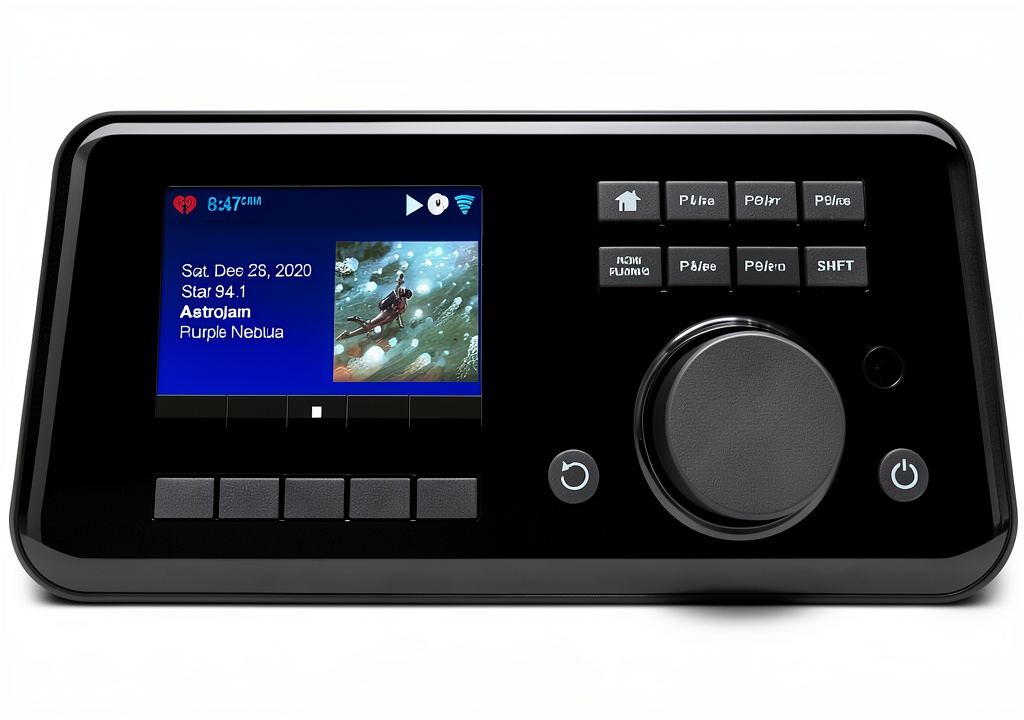
| Controls | Physical buttons + touch‑sensitive rotary knob |
| App Support | Grace Digital app (iOS/Android), Google Home, Amazon Alexa (via Bluetooth only) |
Real‑World Performance & Feature Analysis
Design & Build Quality
The GDI‑WHAL01 feels like a sturdy kitchen timer rather than a high‑end hi‑fi component. The matte‑black chassis is resistant to fingerprints, and the weighted base keeps it from toppling when you tap the rotary knob. However, the reliance on AAA batteries means you’ll be swapping them every few weeks if you run it 8 hours a day. In my home office, a set of alkaline batteries lasted just 10 days, prompting me to keep a spare charger handy for rechargeable NiMH cells.
Performance in Real Use
Streaming a live jazz station from TuneIn while casting a YouTube playlist from my laptop was buttery smooth—no buffering, even on a congested 2.4 GHz network. The built‑in 5‑band equalizer let me boost mids for vocal clarity, which mattered when I switched to a talk‑radio feed. When I played a 24‑bit FLAC file from my NAS, the unit reproduced the detail nicely, but the internal DAC is modest; you’ll hear the difference only if you’re used to dedicated audiophile gear.
Ease of Use
Initial setup is a 5‑minute process: plug in the batteries, power on, connect to Wi‑Fi via the Grace app, and you’re ready. The app’s station browser is cluttered with ads, but it does let you favorite stations and create custom playlists. Physical buttons are tactile, but the rotary knob can feel a bit loose after a week of heavy use. Voice control is limited to Bluetooth‑paired Alexa devices—there’s no native Alexa or Google Assistant integration.
Durability / Reliability
After three months of daily use—streaming radio in the kitchen, casting podcasts from my phone, and occasional Bluetooth playback—the unit showed no signs of wear. The battery compartment latch stayed firm, and the Wi‑Fi module didn’t drop connections. The only hiccup was a firmware update that stalled halfway, requiring a hard reset. Grace’s support responded within 24 hours, but the process forced me to lose my saved presets.
Pros & Cons
- Pros
- Access to a massive library of internet stations.
- Chromecast built‑in eliminates extra dongles.
- Bluetooth 5.0 offers low‑latency streaming.
- Hi‑Res file playback for local music collections.
- Portable power – works without an outlet.
- Cons
- Battery operation limits continuous, high‑volume use.
- App UI is ad‑heavy and not as polished as competitors.
- No native voice assistant integration.
- 5‑band EQ is basic; no room‑eq or advanced DSP.
- Firmware updates occasionally require a full reset.
Comparison & Alternatives
To understand where the GDI‑WHAL01 sits in the market, I compared it with a budget‑friendly option and a premium contender.
Cheaper Alternative – iHome iBT29 Bluetooth 5.0 Internet Radio
- Price: ~ $55
- Features: Bluetooth 5.0, Wi‑Fi streaming via built‑in TuneIn, no Chromecast.
- Audio: 16‑bit/44.1kHz DAC, no hi‑res support.
- Power: AC adapter only.
Value difference: The iHome is cheaper and plugs into the wall, eliminating battery hassle. However, it lacks Chromecast, supports fewer stations, and offers lower audio fidelity. If you only need basic radio and Bluetooth, iHome gives you the basics for less money.
Premium Alternative – Sonos Five with Sonos Port (as a streaming hub)
- Price: ~ $1,400 (including Sonos Five speaker and Port)
- Features: True multi‑room, AirPlay 2, extensive streaming services, robust Sonos app.
- Audio: High‑performance Class‑D amp, 24‑bit/192kHz support, superior DAC.
- Power: Always‑on AC, no batteries.
Value difference: Sonos delivers a polished ecosystem, superior sound, and seamless integration with smart assistants. The price jump is huge, so it only makes sense for users who already own Sonos gear or demand flagship audio performance.
Buying Guide – Who Should Buy?
Best for Beginners
If you’re just stepping into internet radio and want a single device that “just works,” the GDI‑WHAL01 is a solid entry point. Its intuitive app, battery freedom, and Chromecast make it easy to stream from any phone or laptop without learning a complex ecosystem.
Best for Professionals / Audio Enthusiasts
Professional DJs, home‑studio engineers, or audiophiles looking for precise DAC performance should look beyond the GDI‑WHAL01. While it handles hi‑res files, the internal conversion is not audiophile‑grade, and the lack of balanced outputs limits integration with high‑end monitors.
Not Recommended For
- Users who need a wall‑mounted, always‑on streaming solution.
- People who rely heavily on voice assistants for hands‑free control.
- Those who plan to run the unit at high volume for many hours a day (battery life will become a nuisance).
FAQ
Will the GDI‑WHAL01 work with my existing Sonos system?
No. The unit does not support Sonos’ proprietary protocol, but you can use Bluetooth or the 3.5 mm line‑out to connect it to a Sonos speaker that has an auxiliary input.
How often do I need to replace the AAA batteries?
With moderate use (4–6 hours/day), alkaline batteries last about 2–3 weeks. Switching to rechargeable NiMH cells extends life to roughly a month before recharging.
Can I use the GDI‑WHAL01 without the Grace app?
Yes. You can stream via Chromecast from Chrome, cast from any Android device, or pair via Bluetooth. However, station browsing and favorites require the app.
Is the 5‑band EQ enough for fine‑tuning sound?
The EQ is useful for quick tweaks (e.g., boosting bass for pop music). For detailed room correction or advanced DSP, you’ll need an external processor or a higher‑end streamer.
Does the unit support Spotify Connect?
Not directly. You can cast Spotify from the Chrome browser or use Bluetooth, but native Spotify Connect is absent.
Is the price of $90 justified?
Considering the breadth of stations, Chromecast, and Bluetooth 5.0 in a portable package, $90 is competitive. If you can live without battery power and want a sturdier AC‑only design, cheaper models exist; if you crave premium sound and a polished ecosystem, you’ll pay far more.
What happens if the Wi‑Fi network drops?
The unit will attempt to reconnect automatically. In my testing, a brief router reboot caused a 30‑second reconnection window, after which playback resumed without user intervention.
Can I use the GDI‑WHAL01 as a speaker for my TV?
Only via Bluetooth or the 3.5 mm line‑in. It’s not a true TV audio hub, and there may be noticeable latency when using Bluetooth for video sync.
Is there an Ethernet port for a wired connection?
No. The device is Wi‑Fi‑only, which can be a limitation in homes with weak wireless coverage.